Good news has recently emerged within the semiconductor valve industry.
The complete set of vacuum valves from Suoao Holdings (Wuxi) Co., Ltd. has officially passed FAB‑site verification by end‑user customers. This is neither prototype testing nor small‑batch trial production; instead, the full chain from verification to mass production has been truly validated. Meanwhile, the company has secured a ten‑million‑level project order from a single customer for batch delivery to end users.
For an enterprise founded only in 2024, this progress is remarkably fast. Against the backdrop of localization for semiconductor key components, the company has kept pace with clear market momentum.
Why Are Vacuum Valves One of the Toughest Challenges for Semiconductor Equipment? How Stringent Are Semiconductor Manufacturing Requirements for Valves?
Pressure‑control accuracy must reach 0.1% of the set‑point. Seals must achieve zero leakage, and particle generation during operation shall be negligible. Failure in any of these indicators will directly impact wafer yield.
For a long time, the vacuum valve market has been firmly dominated by overseas brands. Despite aggressive capacity expansion by domestic fabs, their procurement lists for vacuum valves were still dominated by those imported brands. Customers had to put up with long lead times, high prices and slow service response due to limited alternatives.
Suoao has made a breakthrough in this near‑monopolized segment. It has built a product portfolio covering three major categories: APC pressure‑control butterfly valves, isolation valves and transfer valves, for production scenarios including process pressure regulation, vacuum isolation and wafer transfer. Its self‑developed APC control algorithm, combined with adaptive self‑learning algorithms, enables one set of equipment to adapt to diverse process conditions.
Most importantly, its products have obtained the “production‑line admission ticket� for domestic substitution: having passed end‑customer FAB verification, they are supplied to leading domestic semiconductor equipment manufacturers. The whole path from prototype to mass production, and from technical compliance to stable supply, has been successfully realized.
Does It Make Business Sense to Develop Both Valves and Exhaust‑Gas Treatment for Semiconductors?
The two segments share partial underlying resources: they both demand mastery of vacuum technology, corrosion‑resistant material selection, sealing performance and precision control. Manufacturing can share clean‑room workshops, helium‑leak‑detection test equipment, and raw‑material procurement for stainless‑steel components and special sealing parts. Sales and after‑sales teams can also be partly shared to lower fixed operating costs.
Nevertheless, their customer‑procurement logics differ significantly. Vacuum valves are core components integrated into process tools, mainly purchased by semiconductor equipment manufacturers, with long qualification cycles. Exhaust‑gas‑treatment equipment belongs to Sub‑fab facility equipment, mostly procured directly by wafer fabs. The two follow separate review and purchasing workflows, limiting cross‑selling effects in actual projects.
For start‑ups, running both lines means heavy R&D and verification investment across two high‑barrier tracks. While it opens opportunities to deliver bundled solutions for new‑build fabs, it also poses higher challenges for talent, capital and project delivery.
The Real Test Begins After Securing Financing
In June this year, Suoao closed a multi‑million‑yuan Pre‑A round financing.
The funding has clear purposes: technological iteration for high‑end valves and capacity expansion of clean production lines. In other words, the capital will not be used for market expansion, but further invested in R&D and production capacity.
This is a pragmatic choice. Passing verification and winning orders only proves that products “can be manufactured�. The real challenge for domestic substitution lies in maintaining consistent product quality amid high‑volume deliveries across multiple customers and diverse process segments. Many domestic equipment firms fail at the mass‑production stage — not due to insufficient technology, but inadequate quality‑control systems and inflexible production capacity.
Independent and controllable supply of key semiconductor components is more than a slogan. Having crossed the threshold for vacuum valves, the real measure of success lies in sustained and stable delivery for numerous customers under varied operating conditions with large‑volume orders.
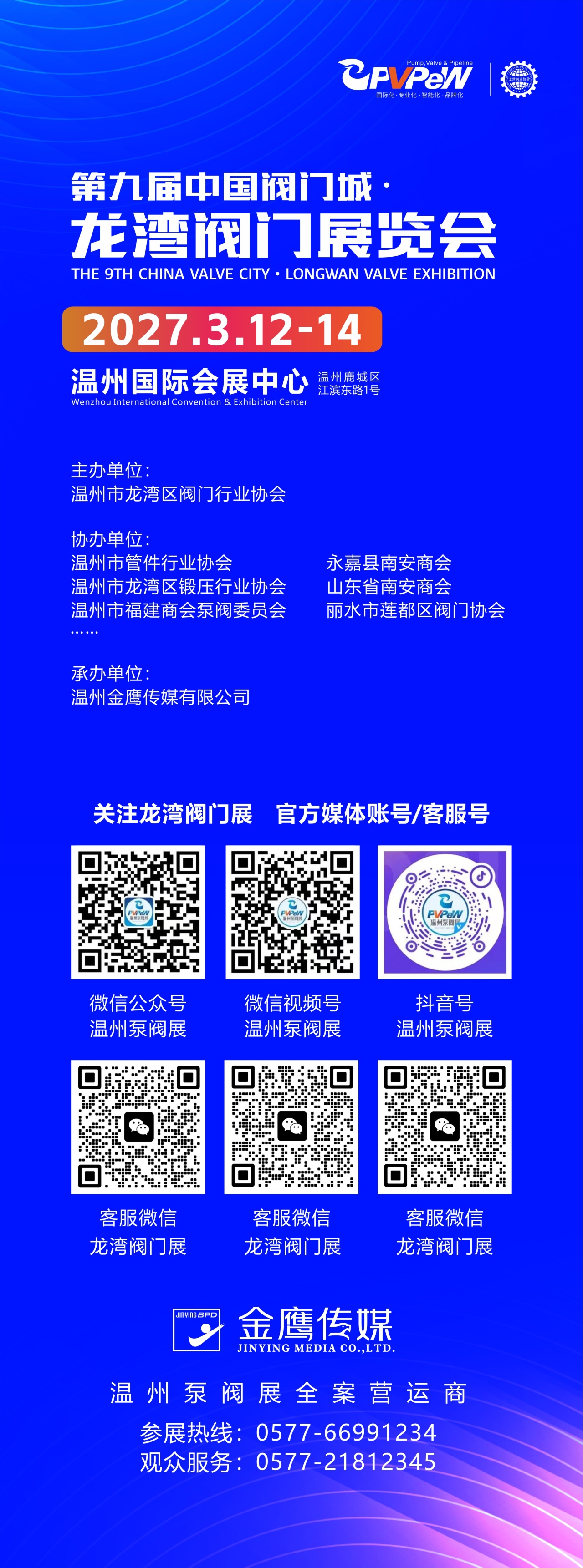
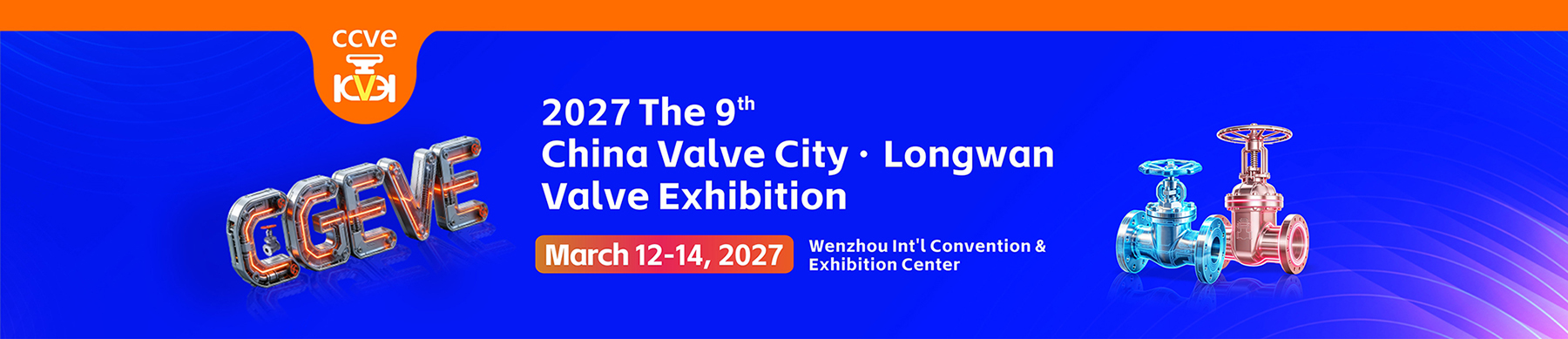
The 9th China Valve City · Longwan International Valve Exhibition
Gathering cutting‑edge smart manufacturing across the entire industrial chain, the event connects premium buyers and suppliers worldwide. Explore domestic and international valve brands all under one roof, and conduct face‑to‑face negotiations for technical cooperation and procurement matching.
Time: Mar 12‑14, 2027
Venue: Wenzhou International Convention & Exhibition Center
Message us for booth reservation & visitor registration.
Disclaimer
Content sourced from Sichuan Feiqiu (Group) Co., Ltd. Part materials are for sharing purposes only and do not serve as operational references. No warranty is made for content accuracy. Copyright belongs to original holders. Please contact us for any copyright concerns for timely revision or deletion.